
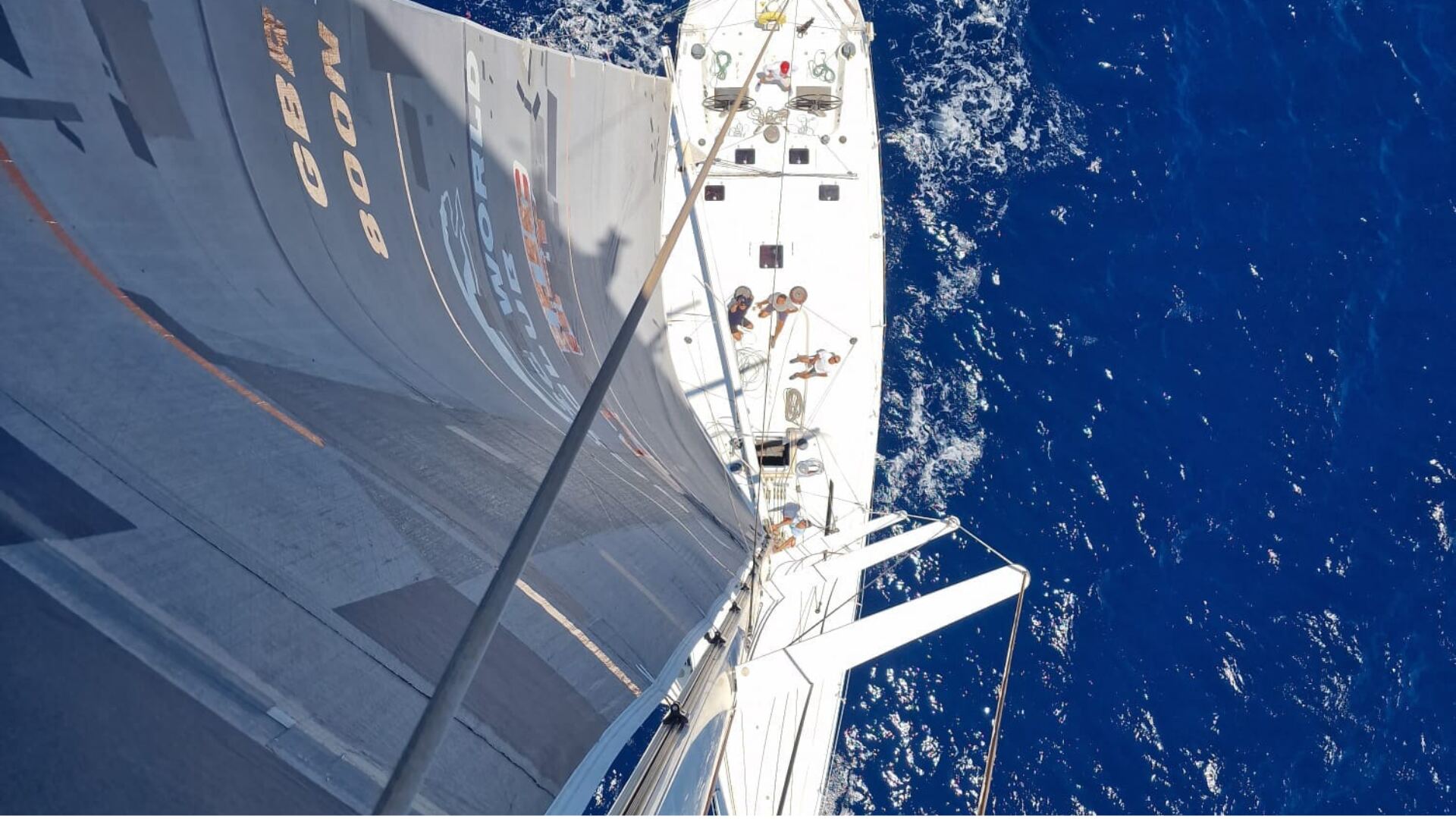

Red Sea
Suez to the Gulf of Aden
Yacht delivery through the Suez Canal and Red Sea
The corridor from the Mediterranean through Suez, down the Red Sea and out past the Gulf of Aden is one of the most demanding managed passages we run. It is a long, hot, logistically thin route with strong seasonal headwinds and very few places to fix a problem quickly.
Because of that, we treat it as a project rather than a booking. Before anything is priced we assess the vessel, her range and systems, the crew profile the passage actually needs, and whether the route is workable at all in the window you have in mind.
Every transit is subject to current risk assessment, vessel capability, insurer, flag and owner requirements, and the official advice in force at the time. We do not state that the corridor is open, safe, closed or recommended as a standing position, and we do not offer tactical security guidance or armed protection.
The corridor we cover
Coverage describes the water we plan and crew passages through, southbound or northbound. It is not a claim of local offices or permanent presence.
Eastern Mediterranean approach
Staging from the Aegean, Turkish coast, Cyprus and the Levant towards the canal approaches.
Suez Canal transit
Northern and southern approaches with transit coordination handled as part of the delivery plan.
Northern Red Sea
Gulf of Suez and Gulf of Aqaba approaches, narrow water and heavy commercial traffic.
Central and southern Red Sea
The long middle section towards Bab-el-Mandeb, with limited practical stop options.
Gulf of Aden
The exit or entry leg between Bab-el-Mandeb and the Arabian Sea, planned case by case.
Indian Ocean connection
Onward or inbound legs linking the corridor to the wider Indian Ocean and the Gulf.
Typical Red Sea corridor passages
Gulf of Aden to the Mediterranean
Northbound, usually the harder direction because of the prevailing northerly flow in the northern Red Sea.
Red Sea operating considerations
Passage assessment comes first
We start with feasibility: hull and rig condition, engine hours, spares, tankage, watermaker and autopilot redundancy. If the vessel is not suited to the corridor we say so before quoting rather than after departure.
Wind and direction matter more than distance
The northern Red Sea is dominated by a persistent northerly flow, which makes southbound and northbound very different jobs. Sea temperature, heat and dust also affect engine cooling and crew endurance.
Range, fuel and logistics
Stops that suit a private yacht are limited and spare parts are hard to source at short notice. We plan fuel and consumables against a conservative 6 knot average, roughly 144 nautical miles a day, and carry the critical spares with the crew.
Crew suitability
This is not a first delivery route. We crew it with skippers and crew used to long offshore legs, heat, commercial traffic and self-sufficient watchkeeping.
Communications and shore oversight
Satellite communications and continuous position reporting are part of the plan, with the operations team ashore reachable at any hour for routing and technical decisions.
Risk assessment is live, not static
Route decisions follow current official advice and insurer, flag and owner requirements at the time of the passage. Nothing on this page should be read as a standing statement that a given leg is available.
Transit coordination
Canal and port formalities are coordinated at a high level as part of the delivery so the owner has one point of contact, with local requirements handled through the appropriate channels.
Documentation and handover
Condition report, photographic record and ship's log at departure and arrival, with a managed handover at the receiving port.
How Yacht.Delivery manages the passage
The corridor is unusual. The management process behind it is the same one used on every Yacht.Delivery passage.
Professional crews
Passages are run by qualified delivery skippers and crew, with certification supplied before departure.
24/7 operations support
An operations team stands behind the crew for routing, technical and logistics decisions at any hour.
HELM live tracking
Every delivery runs on HELM with live position, daily reports and the full ship's log visible to you.
Transparent expenses
Costs are logged against the delivery as they happen and reconciled at handover. No surprises.
Documentation and handover
Condition report, photographic record and ship's log at departure and arrival. Nothing is verbal.
Services for this region
Considering a Suez, Red Sea or Gulf of Aden passage?
Send us the vessel, the intended direction and the window. You get a feasibility and risk assessment first, then a delivery quotation.
Start an enquiry